Fort Worth, Texas
Fort Worth fire damage restorationsmoke, soot and water handled in the right order
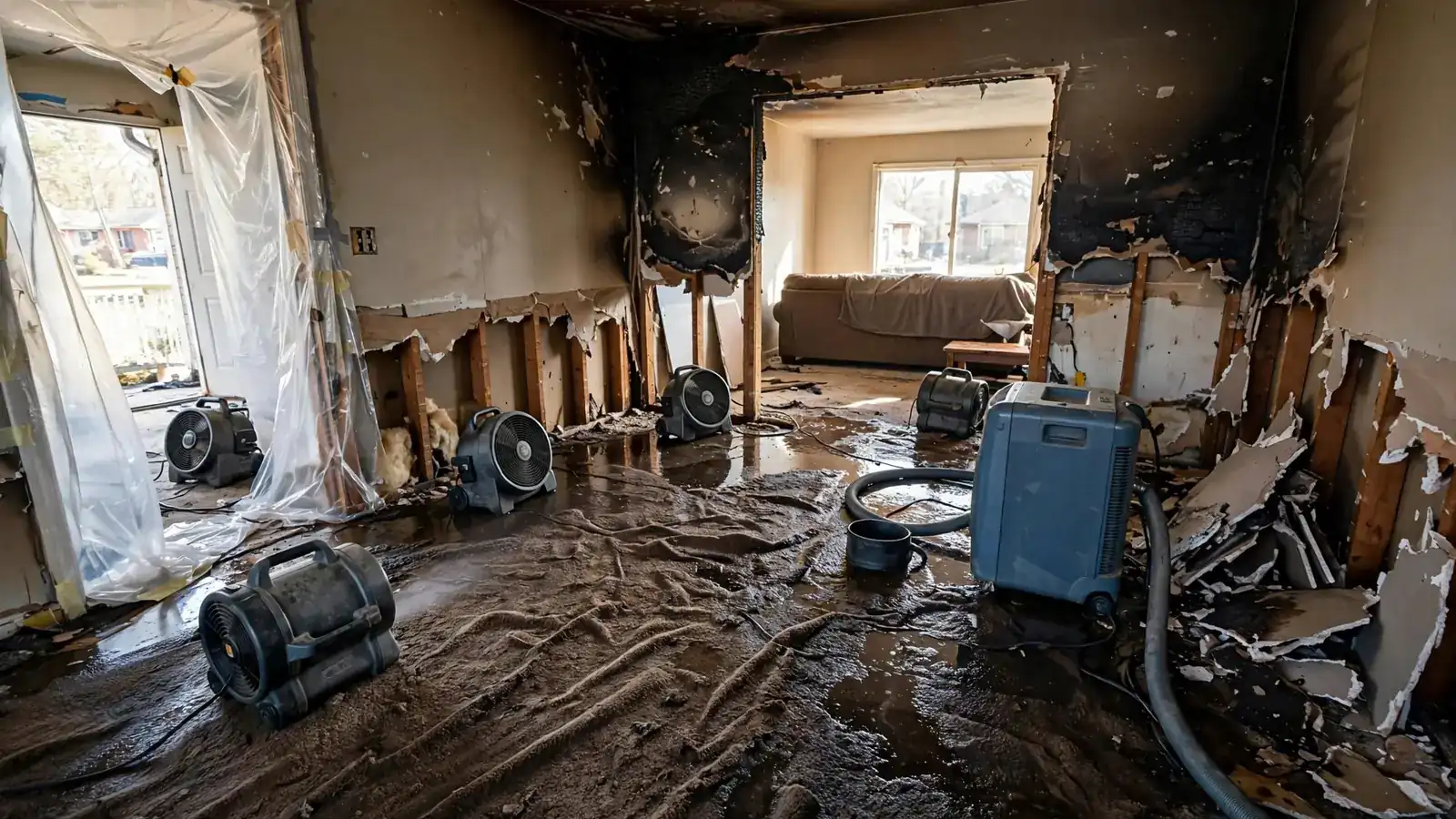
A house fire leaves more than burned rooms: smoke residue in every closet, soot on ceilings far from the flames, and water from firefighting soaking floors and walls. Call and you will be connected with an independent local restoration contractor who talks it through with you on that same call.
Call-in referral service: your call connects to an independent local restoration contractor who speaks with you on that call.
- Smoke and soot cleanup
- Firefighting water dried
- Odor removed at the source
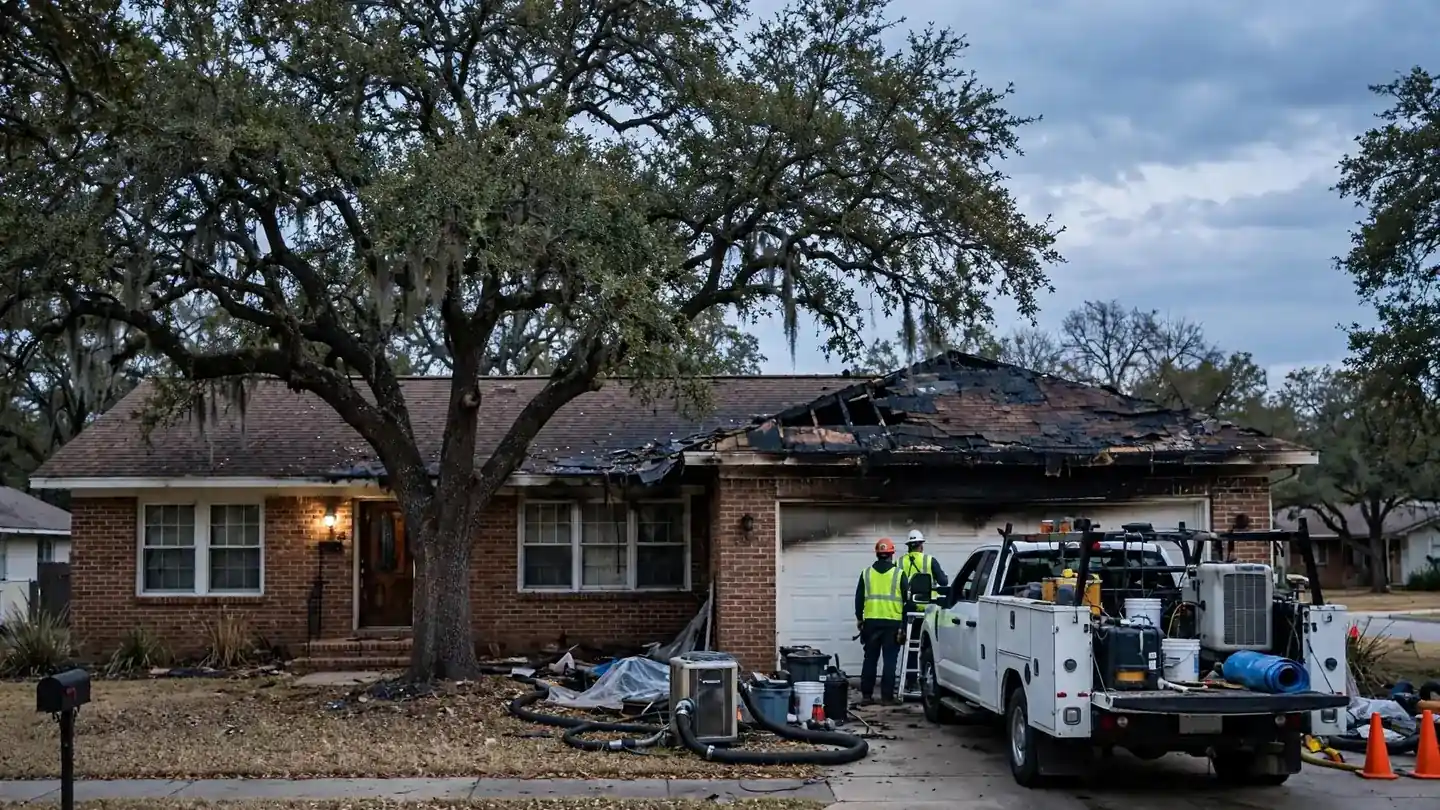
- Board-up and roof tarping
- Call-in onlyYour call connects straight to an independent local contractor. No forms, no callbacks you did not ask for.
- Fort Worth coverageFairmount to Park Glen: 32 Fort Worth ZIP codes in the Lead Smart coverage area.
- Whole-house approachSmoke, soot, water, odor, attic and air system, not just the burned room.
- Plain answersGuides written from public sources, with no sales pressure.
Key facts: Fort Worth fire damage restoration
- Cooking is the leading cause of home fires in the United States, according to the NFPA [1].
- The U.S. Fire Administration warns that soot and dirty water left after a fire can make people sick [2].
- The EPA advises drying water-damaged materials within 24 to 48 hours to prevent mold [3].
- IICRC S700 is the industry's published standard for restoring homes after fire and smoke [4].
Services
Fire restoration services for Fort Worth homes
Each part of a fire restoration has its own methods. These pages explain how each is done.
 Start here
Board-Up and Tarping
Broken windows, doors and roof openings secured with plywood and tarps so weather and intruders stay out while the claim moves.
Learn more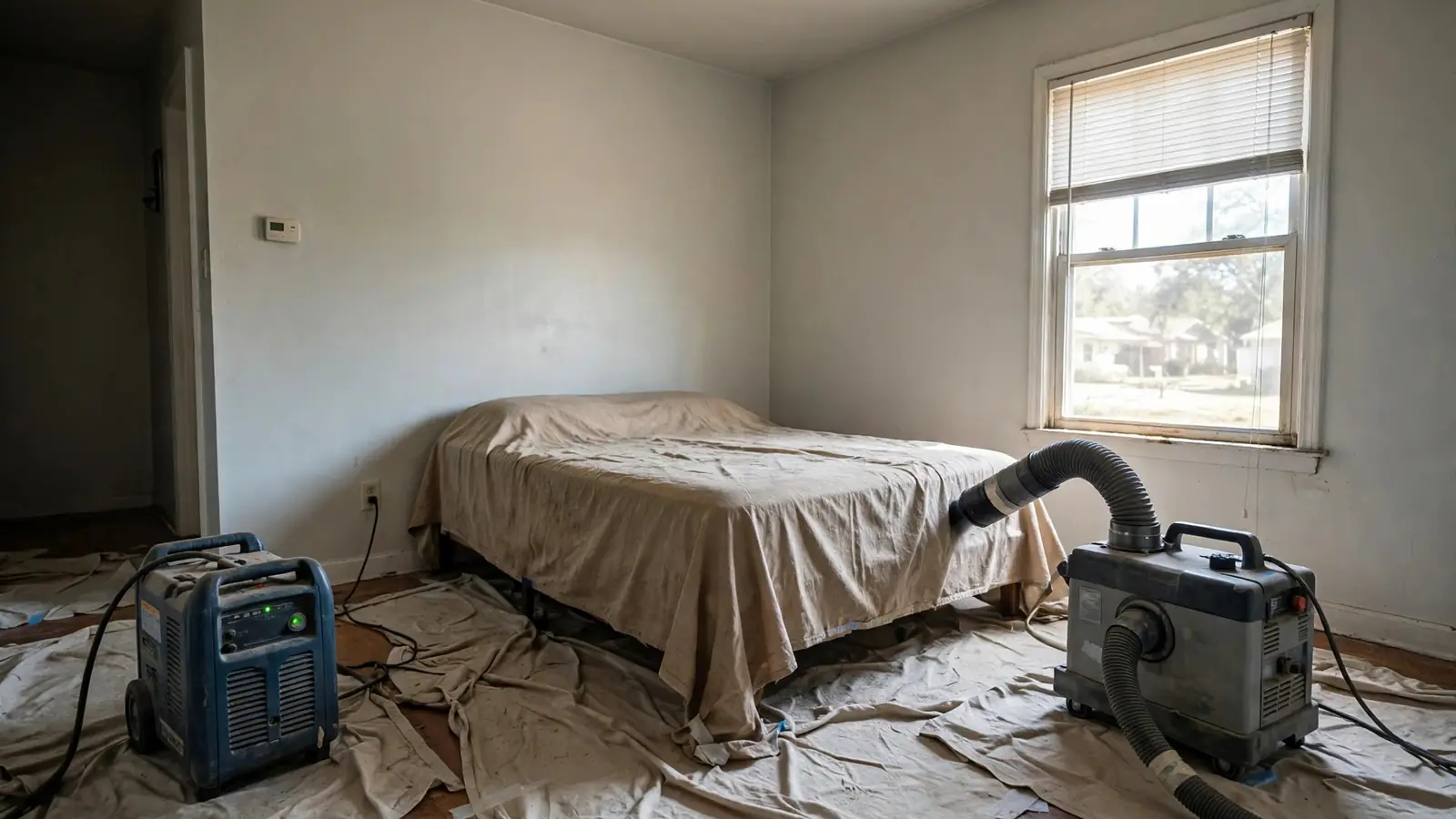
Start here
What are you dealing with right now?
Pick the problem closest to yours for a plain-language guide.
Before you go back inside
Wait until the fire department says the house is safe to enter. Roofs and floors can be weakened in ways you cannot see. Leave power and gas off until a professional checks them, and do not run the air conditioning, which spreads smoke through the ducts.
- Wait for fire department clearance
- Keep utilities off until inspected
- Do not wipe soot with water
- Throw out food and medicine exposed to smoke
Why use this site
A clearer way through a house fire
No sorting through ads and forum threads. Plain answers in the order you need them, then one call.
Safety first
Every page flags structural, electrical and air-quality risks before anything else.
Order of work
Water, soot, odor and rebuilding explained in the sequence that keeps damage from returning.
Fort Worth homes
Pier-and-beam bungalows, slab ranches and two-story homes each handled on their own terms.
Call-in only
No forms and no follow-up marketing. You talk to a local contractor on the call itself.
Dry before you rebuild
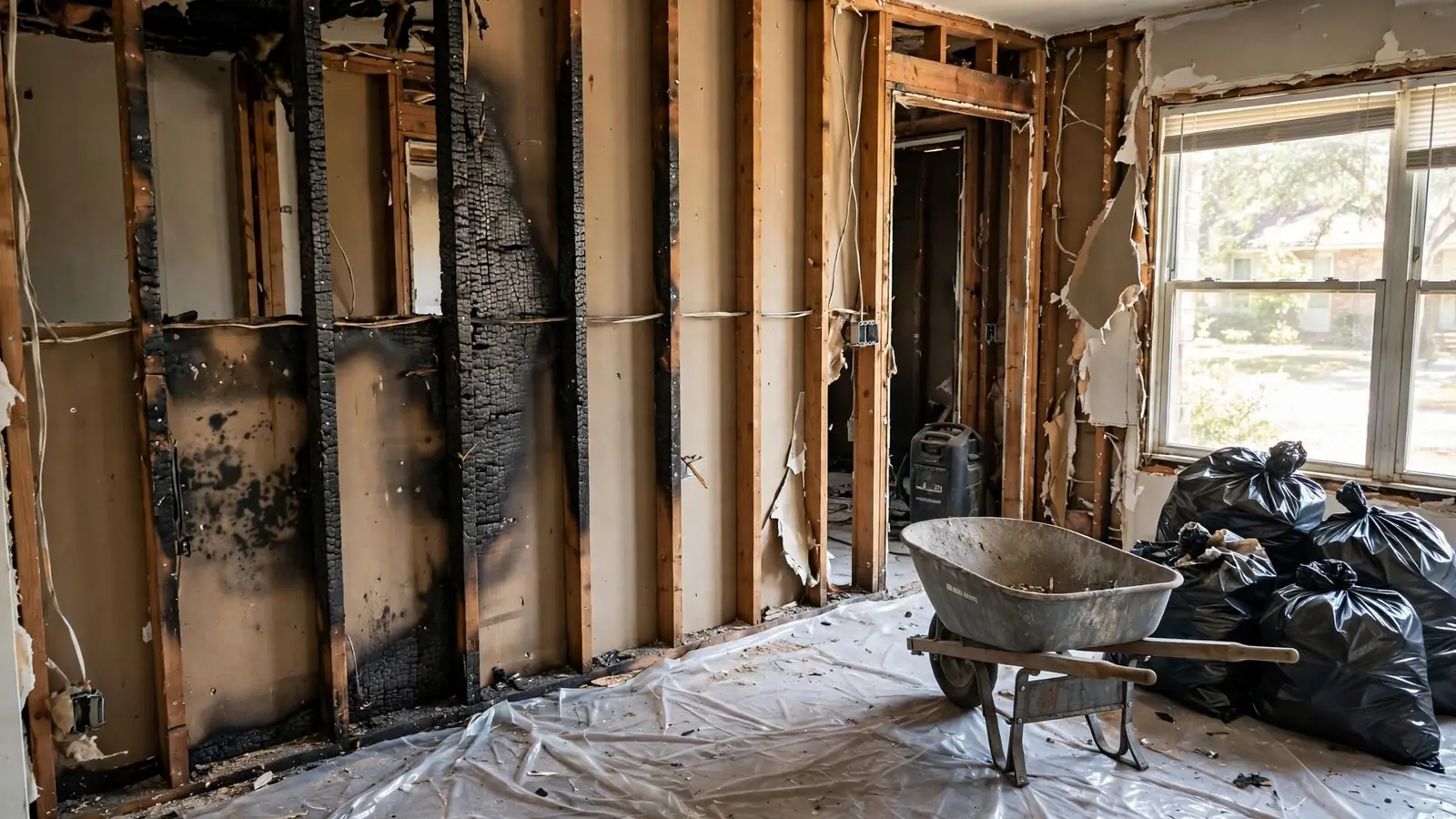
Paint and new drywall over damp or sooty framing fail. Readings should show dry first.
The call
Three steps from the call to a clean house
- 1
Step 1
You call the number on this site
Your call is connected directly to an independent local restoration contractor.
- 2
Step 2
You talk it through
Explain where the fire started, whether the house is cleared, and what you are seeing. The contractor answers on that same call.
- 3
Step 3
You decide what comes next
Anything that happens after the call is agreed between you and the contractor while you are talking. We do not collect your details.
Why it spreads
Why a small fire can affect the whole house
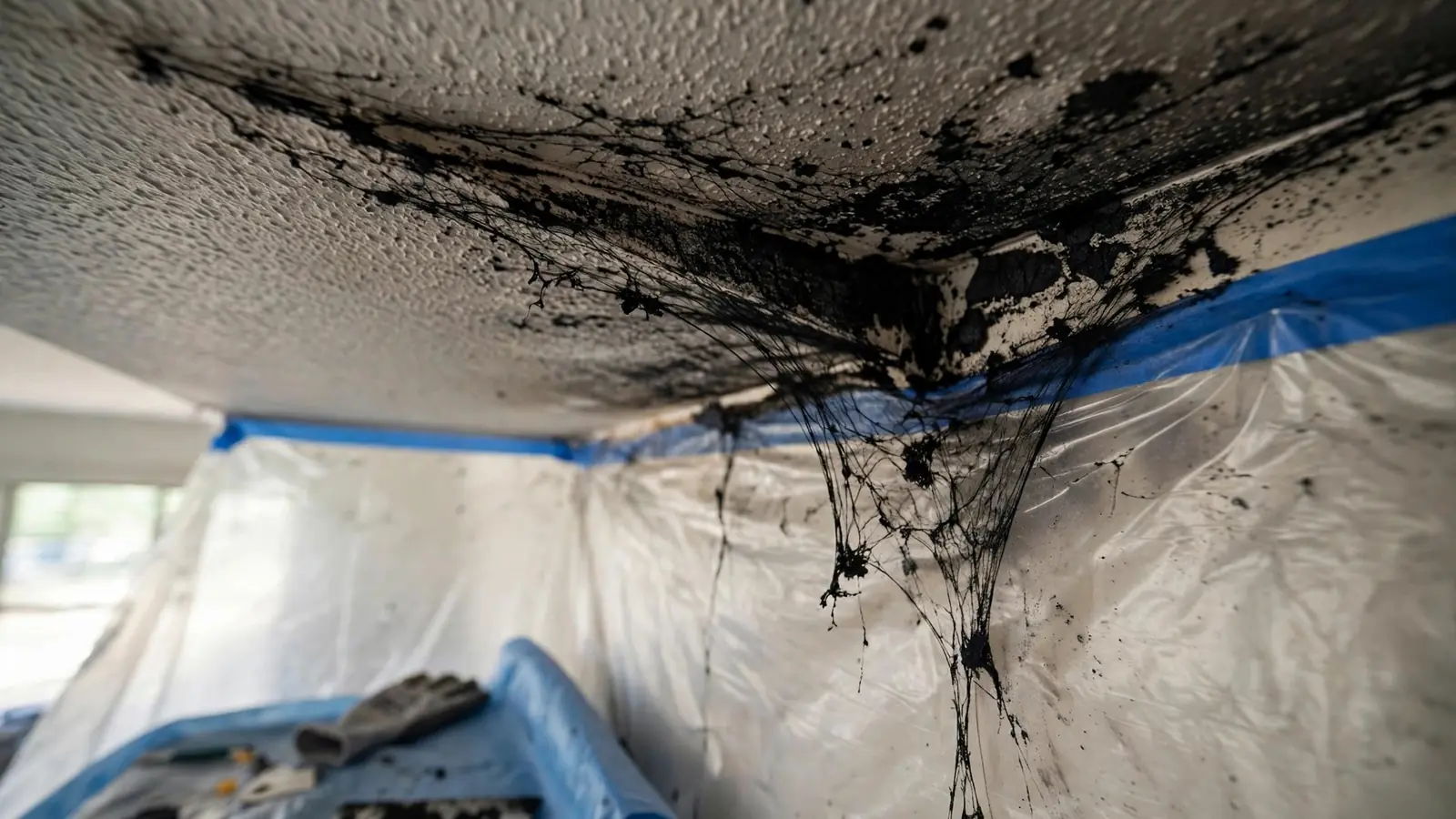
Smoke is pushed by heat and pressure into every room, closet and cavity it can reach. In many Fort Worth homes, the air handler and ducts sit in the attic. If the system ran during or after the fire, it spread residue to every register in the house.
That is why restoration is about more than the burned room. Ceilings along the smoke path, closets full of clothes, attic insulation, ductwork and the crawl space under older pier-and-beam houses can all hold residue and odor.
- Smoke follows ceilings and hallways
- Attic ducts carry it to every room
- Closets trap odor in clothing
- Water soaks floors and walls below
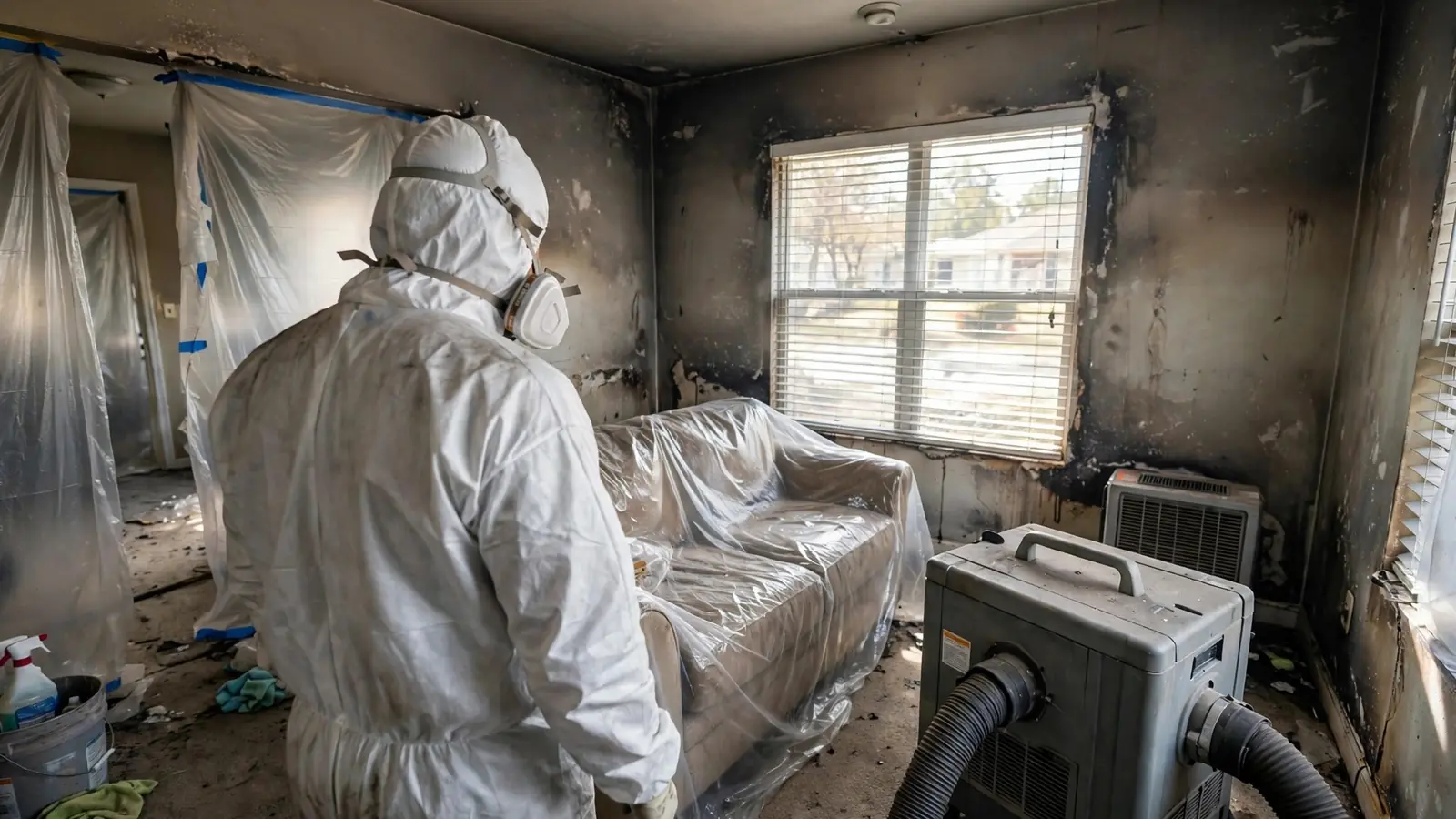
What a finished smoke restoration looks like
From grey, sooty surfaces to clean, sealed and repainted rooms.
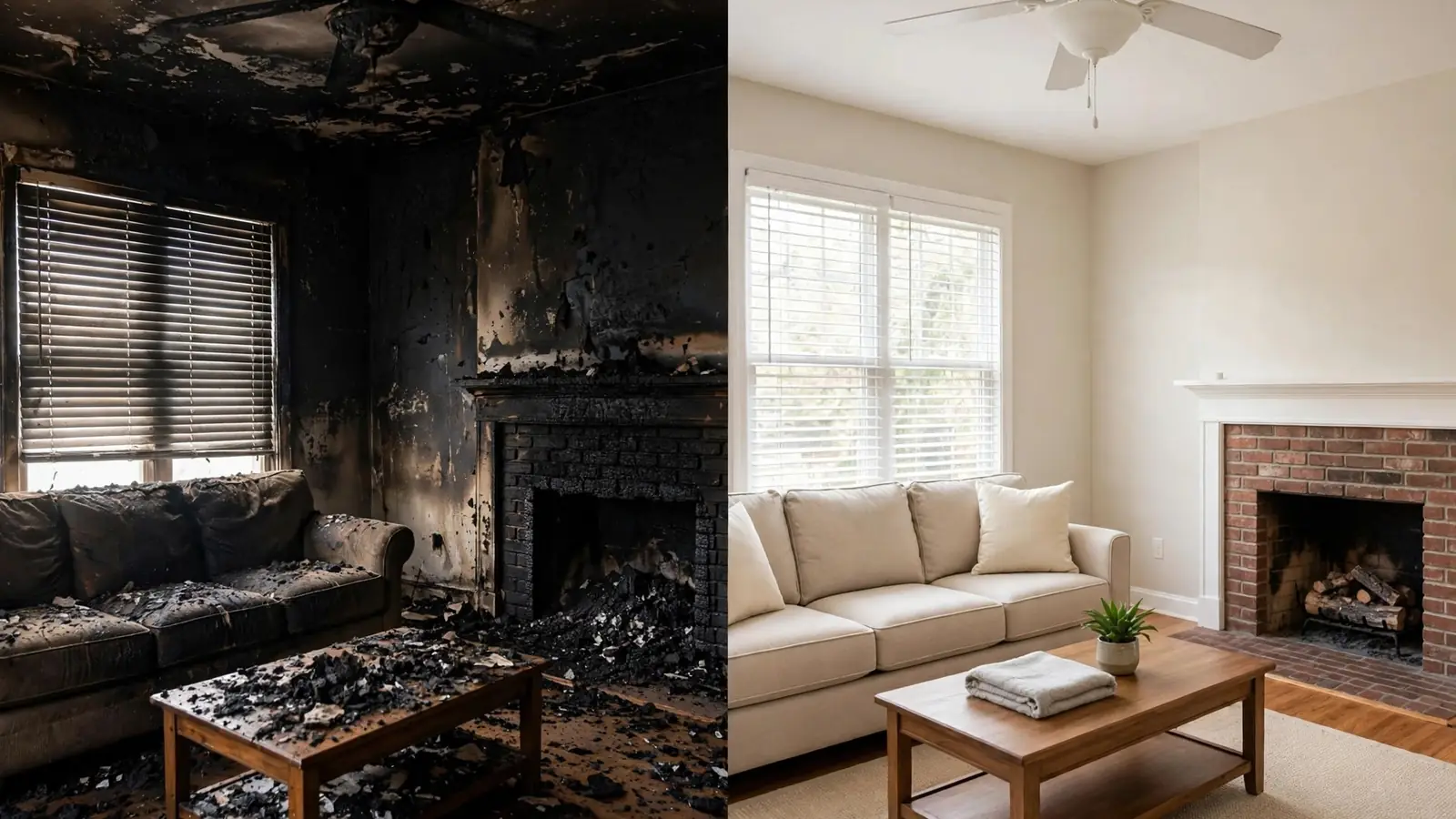
More before and after examples
Typical results by room.
 BeforeAfter
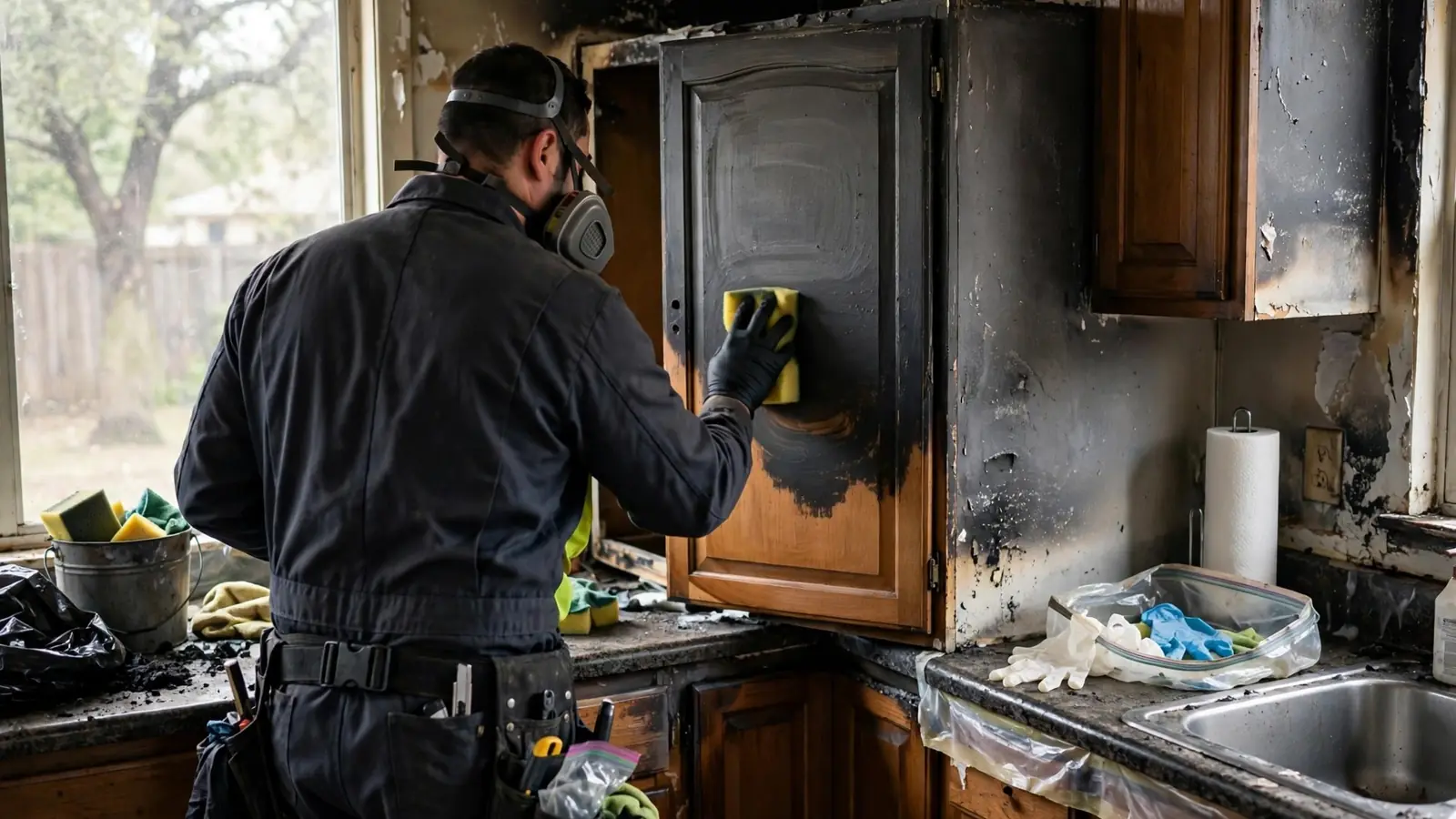
Kitchen cabinets
Protein residue cleaned and cabinets refinished.
 BeforeAfter
Ceiling
Soot removed dry, sealed and repainted.
 BeforeAfter
Bedroom
Contents cleaned, walls sealed, odor treated.
 BeforeAfter
Hallway
Smoke path along the ceiling cleaned.
 BeforeAfter
Brick eaves
Masonry cleaned, trim replaced.
 BeforeAfter
Garage
Gutted, cleaned and rebuilt.
Where
Fort Worth neighborhoods we cover
Each neighborhood page explains how local housing affects fire, smoke and water damage.
 Service area
Arlington Heights
West side homes that grew after Camp Bowie: 1920s and 1930s bungalows and period revivals with plaster, wood and detached garages.
Learn more Service area
Fairmount
Historic Near Southside homes from 1890 to the late 1930s: balloon framing, pier-and-beam floors, plaster and original wood.
Learn more Service area
Northside
Older frame cottages near the historic Stockyards: wood siding, close-set houses, pier foundations and long-lived wiring.
Learn more Service area
Park Glen
Late-1980s and 1990s north Fort Worth subdivision: two-story homes, vaulted rooms, attic HVAC zones and front-entry garages.
Learn more Service area
Ridglea
West side brick cottages and ranches from the 1940s and 1950s: compact rooms, older panels, small attics and alley garages.
Learn more Service area
Ryan Place
Large homes from 1911 onward plus postwar infill south of downtown: multi-story layouts, big attics and mixed-era materials.
Learn more Service area
Tanglewood
Mid-century brick and stone ranch homes west of TCU along the Trinity: long rooflines, attached garages and attic ductwork.
Learn more Service area
Wedgwood
Southwest Fort Worth brick ranches with attached garages on slabs: textured ceilings, attic ducts and long hallways.
Learn more
How it works
How restoration usually runs, step by step
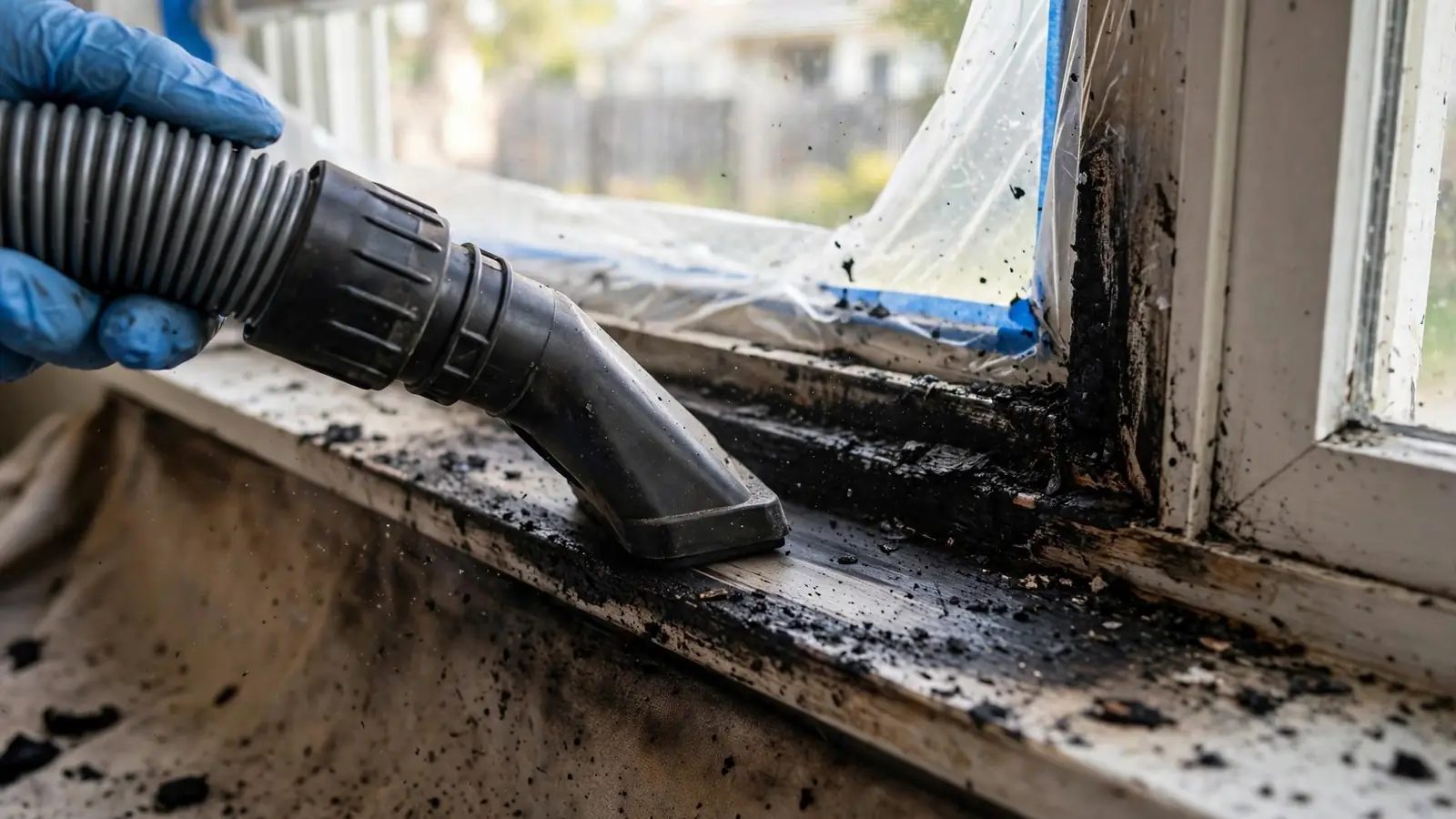
Restorers in the United States generally follow IICRC S700 for fire and smoke damage [4]. The sequence matters: secure the house, get the water out, remove what cannot be saved, clean residue dry before wet, clean the air system, treat remaining odor, seal, then rebuild.
Doing these in the wrong order, such as painting before sealing or reinstalling floors before the slab is dry, is the most common reason odor or damage returns.
- Secure and protect
- Extract water and dry
- Remove and clean
- Deodorize, seal and rebuild
Decide
Clean, seal or replace? A quick guide
| Material | Usually | Why |
|---|---|---|
| Painted drywall with light film | Clean and seal | Residue sits on the surface |
| Charred or soaked drywall | Replace | Damaged and holds odor |
| Attic insulation with smoke | Replace | Cannot be cleaned; major odor source |
| Carpet pad | Replace | Absorbs smoke and dirty water |
| Sheet metal ducts | Clean | Hard surfaces clean well |
| Insulated flex duct | Often replace | Holds odor in its jacket |
| Glass, tile, metal fixtures | Clean promptly | Residue etches if left |
Fort Worth specifics
What makes fire restoration in Fort Worth different
Fort Worth's housing spans a century. Early twentieth-century bungalows in Fairmount and the Northside sit on pier-and-beam floors with crawl spaces that collect firefighting water and smoke. Mid-century brick ranches in Tanglewood, Ridglea and Wedgwood have slab floors, attached garages, textured ceilings and attic ductwork. Newer two-story homes in Park Glen have vaulted rooms and two air systems.
North Texas heat matters too. Attics get extremely hot in summer, and smoky insulation releases odor every warm afternoon until it is removed. Spring storms can pour water into a roof opened by the fire, so temporary protection needs to be secure. Several central neighborhoods are historic districts where exterior changes may need city review.
Coverage matters as well. This service only takes calls from ZIP codes inside the Lead Smart coverage area for fire damage, so the contractor you reach on the call is one who works in your part of the city. Each neighborhood page lists the ZIP codes it covers and explains what is different about restoring homes there.
For a closer look at each step, browse all fire restoration services, or read the questions and answers page for short answers to what people ask most after a fire.
Guides
Plain-language guides for after a fire
 Guide
Is it safe to stay after a fire
How to judge whether a home is safe to stay in after a fire: structure, utilities, air quality, water and who makes the call.
Read the guide Guide
Smoke odor that won't go away
Why smoke smell keeps coming back after cleaning, where it hides in Fort Worth homes, and what actually removes it.
Read the guide Guide
Soot on walls and ceilings
What black or grey marks on walls and ceilings mean, why wiping makes them worse, and how soot is safely removed.
Read the guide Guide
What to do after a house fire
The first hours and days after a fire in Fort Worth: safety, shelter, insurance, securing the house and starting cleanup in the right order.
Read the guide Guide
Working with your insurance adjuster
How a fire claim works in Texas: the adjuster's role, documenting damage, contents lists, living expenses and getting help if you disagree.
Read the guide
FAQ
Fire damage restoration questions
What does fire damage restoration include?
Securing the house, removing water, removing ruined materials, cleaning smoke and soot from surfaces and contents, cleaning the air system, treating odor, sealing, and rebuilding. The order matters as much as the steps.
How soon should restoration start after a fire?
As soon as the fire department releases the home and your insurer is notified. Water needs drying within days to prevent mold, and soot keeps damaging glass, metal and porous surfaces. [3]
Can smoke damage be cleaned, or does everything need replacing?
Many surfaces and items clean well when handled correctly. Materials that are charred, soaked or full of residue, such as insulation and carpet pad, are usually replaced.
Who answers when I call?
An independent local restoration contractor. This site is a call-in referral service: your call connects to them and you talk on that call. We do not do the work ourselves.
Do you serve my part of Fort Worth?
Calls from 32 Fort Worth ZIP codes are in the coverage area, including Fairmount, Arlington Heights, Ryan Place, Tanglewood, Ridglea, the Northside, Wedgwood and Park Glen.
Does insurance cover fire damage restoration?
Many homeowners policies cover sudden fire and smoke damage, but every policy differs. Call your insurer, document everything and keep receipts. The adjuster confirms coverage.
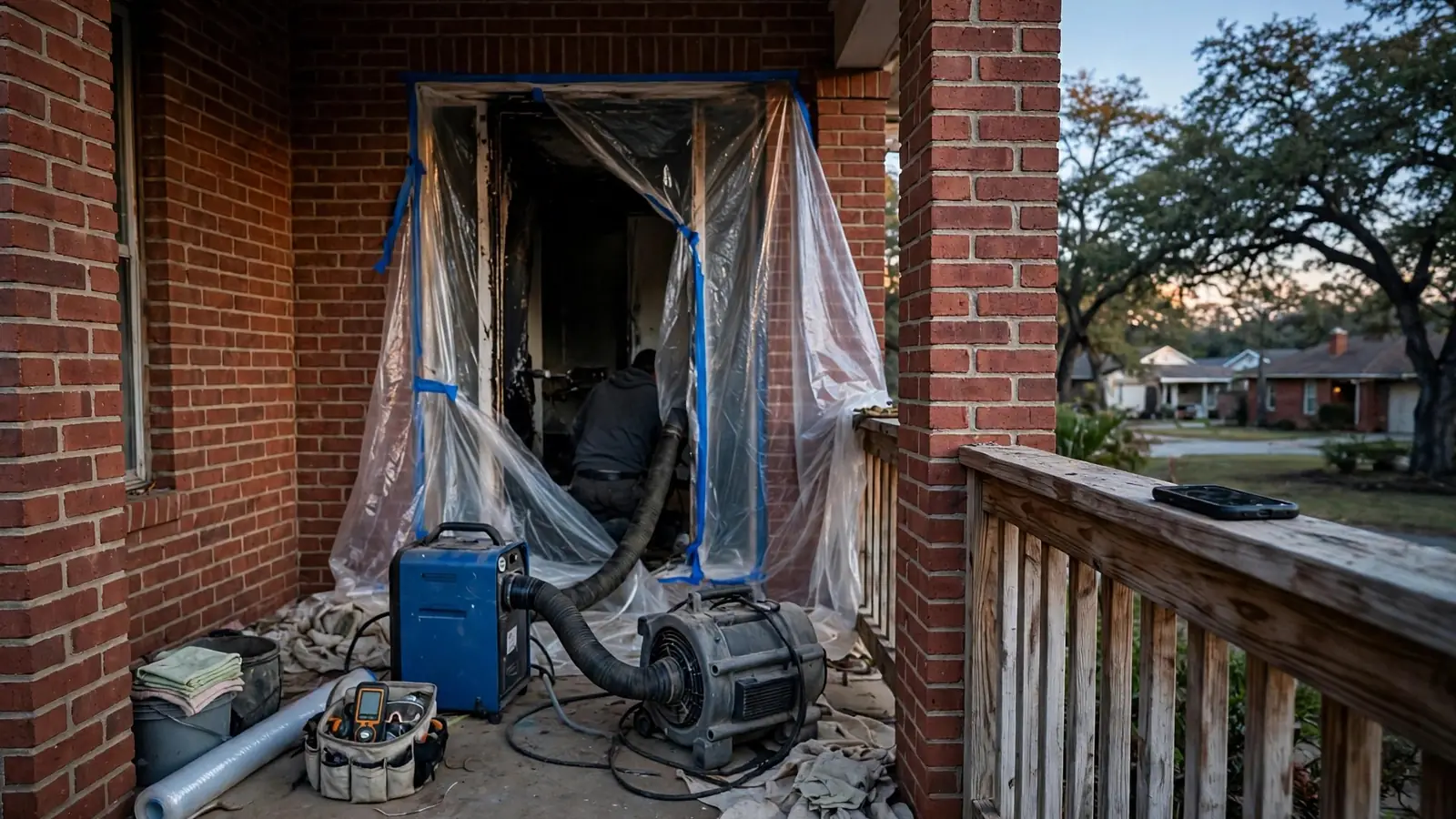
Talk to a Fort Worth restoration contractor now
Questions about your home? Call and talk it through with an independent local restoration contractor on that same call.
Sources and citations
Keep reading